
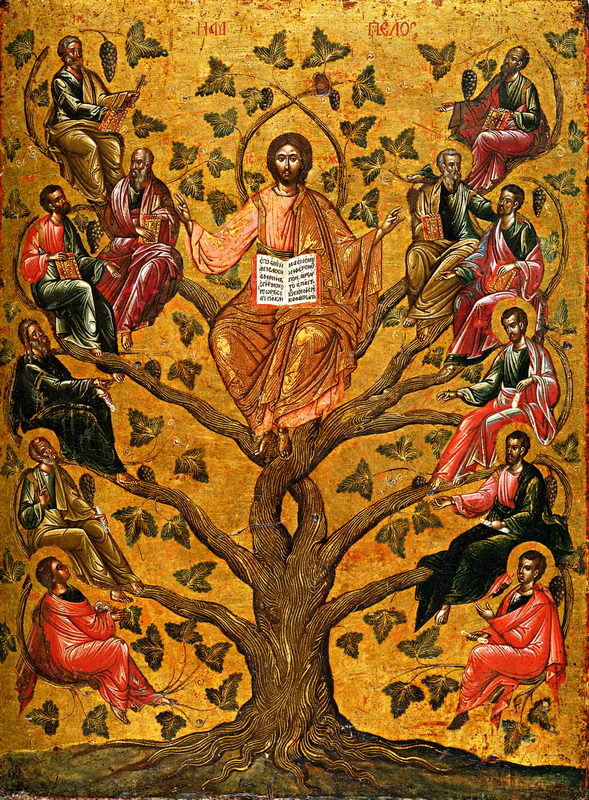
The Dicastery for the Causes of Saints at the Holy See organized a three-day conference in the Vatican from 3 to 6 October 2022, which focused on the theme “Holiness Today”. The aim was to deepen the ways of making holiness relevant and up-to-date in the present day, especially how to canonize those faithful who already have a certain reputation for holiness among the People of God. The conference was intended for postulators, academics and theologians who deal with the canonization process on a daily basis.
The theme chosen for the conference, “Holiness Today”, directly reflected the content of Pope Francis’s apostolic exhortation “Gaudete et Exsultate” (2018), which examines the concept of holiness in our time in both practical and theoretical terms; and from this papal call there was also a reminder of the teaching of the Second Vatican Council that all are called to holiness. “The Holy Spirit sows holiness abundantly among God’s holy and faithful people, because God has willed to save people not as isolated individuals without any bond among them, but as a people who may truly know him and serve him in holiness. In the history of salvation the Lord saved a people. We are never fully ourselves if we do not belong to a people. Therefore no one is saved alone, as an isolated individual. Rather God draws us to himself, taking into account the complex network of relationships that exist among human beings.” (GE,6) Consequently, everyone is called to holiness, each one of us. The symposium recalled Saint John Henry Newman’s teaching from his text “The Short Way to Perfection”, where he writes: “If we wish to be perfect, we need do nothing more than fulfill our daily duties… Perfect is the one who does his daily actions rightly; to attain perfection we do not have to exceed those bounds.” Thus, holiness is above all an awareness that God loves us and that we can freely receive his love and mercy, which leads to the joy that characterizes the life of the blessed and the saints.
On the path of holiness there are often obstacles that can be overcome through cooperation with the Holy Spirit. We all encounter the signs of the times. The Christian community accepts and lives through the signs of the times; it is in solidarity and lives in complete service – it lives the life of a child of God. Worldwide it is important to show the presence of love everywhere, especially today, when the media continually sends us messages of death and fear, to notice and help our neighbor, and to act together. Holiness in practice is nothing other than charity fully lived, and its measure comes from the growth that Christ achieves in us insofar as we, through the power of the Holy Spirit, take as our model to live our whole life according to Him (GE, 21).
Often Christians in the world have become strangers and pilgrims, but holiness can be an inspiring force that leads us to dedicate ourselves to justice, peace and the protection of creation in today’s world. Holiness constantly helps us to strive for peace, freedom and justice.
There is still a widespread understanding of holiness as something unattainable, of the heroism of virtues as a state of superiority that is not available to everyone. Sister Meloni from the Pontifical University of St. Anthony explained that this is certainly not the case and emphasized that heroic virtue cannot be understood as a self-sufficient commitment by which a person attains salvation by his own strength, but rather as a formed response to God’s grace. Followers of Christ are called by God not because of their merits but according to His purpose and grace. They are justified in the Lord Jesus; through the baptism of faith they truly become children of God and also share in the divine nature. In this way they are actually made holy. Thereafter, by God’s gift they must hold fast to the holiness received and bring it to fulfilment in their lives (Lumen Gentium, 40). He chose us before the foundation of the world to be holy and blameless before Him in love.
Sister Melone went on to say that a saint is to be imitated not so much for his or her individual gestures and conduct, but rather because he or she exerts such an attraction that others, following that example, seek their own form of following Christ. And what following the example of the saints evokes is an understanding of a beautiful, wholly successful life.
In the lives of the saints one perceives directly the expansion of human potential through God’s love. What makes them contemporary for every person and every age is that they have fully acquired the likeness of Christ so that they can say, as Saint Paulus told the Galatians: ‘I no longer live, but Christ lives in me.’ Sister Melone, speaking about Assisi’s Saint Franciscus, emphasized his particularity, which stems from the fact that each generation and each era has had to regard Franciscus’s message as applicable to its own time and has recognized it as relevant to itself and to the situation of its spiritual life. Thus Assisi’s Franciscus could be a good example and a companion on the path of holiness even in today’s world.
But what is this path of holiness? ‘The path of holiness is the heart of Christian life,’ explained Father Federico Lombardi, SJ, president of the Joseph Ratzinger Foundation and former Holy See press spokesman. He said that there are many exemplary saints, because everyone is called to holiness. Saints are part of a larger community, and the relationship with them encourages us and makes us feel ourselves to be God’s people. The first example, Father Lombardi said, is always Jesus Christ. ‘On the journey Jesus’ example becomes more familiar to us. The saints bear witness to being on that journey; the language in which the Lord speaks to us is the language of the saints’ witness.’ He added that, to grasp its depth, the Church today needs exemplary priests and holy families who show the ways of true love.
Rosalba Manes, professor of Biblical theology at the Pontifical Gregorian University, recalled that the Pope explains in the apostolic exhortation “Gaudete et Exsultate” that Jesus showed us in his simplicity what it means to be holy when he spoke of the Beatitudes. In this is reflected God’s gaze, which we are called to apply in our daily lives. Jesus, the theologian concluded, proclaims with the Beatitudes the programme of his life and mission, describing his gentle, merciful, justice-oriented style and his life with open hands — that is what each of us has been called by baptism to live in order to flourish in the fullness of holiness.
Angela Anes Bello, former professor of the history of philosophy at the Pontifical Lateran University, emphasized that Jesus does not speak abstractly about humility or poverty, but about those who concretely show themselves as humble or poor. Holiness, which can and must already manifest itself in this life, is directed toward reconciliation, toward peace among people. A reconciliation that can be achieved by being gentle, merciful, just, peaceful, simple and open — all of which is accomplished through overcoming sin. The ideal of being a saint is not suffering, Professor Ales Bello concluded, as it appears from a superficial reading of the lives of the saints, but the ideal is a better way that cannot be reached without suffering. She referred here, for example, to the martyrdom of Püha Risti Teresa Benedicta. If everyone agreed to be gentle, merciful and just, there would be no more persecution. But evil continues to exist in the world; holiness belongs to those who are the salt of the earth, a small group that can become more numerous if we follow the Word.
The conference also addressed the challenges of the digital age. The opportunities and risks of using digital and social media do not concern only the reputation of sanctity; they affect everything and are interwoven with various ethical and existential questions. It is an age in which we experience wonderful things through technology that connects the world from one end to the other, yet so often becomes a confusion of information and conflicting messages in which it is difficult to find the harmony of truth and love. The Blessed Carlo Acutis, a young man who was beatified a year ago in Italy, could be the patron of the digital age. He found digital technology to be a means of proclaiming truth and love and made the internet a mediator between God and young people in proclaiming his miraculous deeds. Of course, the framework addressing these topics of digital technology would require deeper reflection and, based on the notion of sanctity, broader discussion.
The conference ended with an audience with the Pope. All the delegates were able to personally greet the Pope and, if necessary, present their causes for canonization. In his closing remarks the Pope said that sanctity arises within Christian communities and is recognized by the People of God itself, since only they have the particular ability to recognize examples of sanctity and outstanding witnesses of the Gospel. This fama sanctitatis, that is, the reputation of sanctity, is an important element in recognizing the sanctity of future saints. Without it no candidate for sainthood reaches the level of the blessed or of the saints. Still, continued Pope Franciscus, it remains necessary to verify that this reputation of sanctity is spontaneous, stable, lasting and widespread in the Christian community, not artificially created. To this end the Dicastery for the Causes of Saints examines very carefully the boundaries that define the reputation of sanctity of a candidate for sainthood.
Pope Franciscus emphasized that the saints are valuable pearls; they are always alive and relevant and never lose their importance. The Pope expressed the hope that their example will enlighten the mindset of people of our age, revive faith, enliven hope and kindle love, so that everyone feels drawn to the beauty of the Gospel and no one errs in the darkness of meaninglessness and despair. He concluded his address with a prayerful hope that the insights and proposals of the symposium will help the Church and society as a whole perceive the signs of holiness that the Lord never ceases to raise, sometimes even in the most unexpected ways.
Marge-Marie Paas
Roman Catholic Church in Estonia